소개

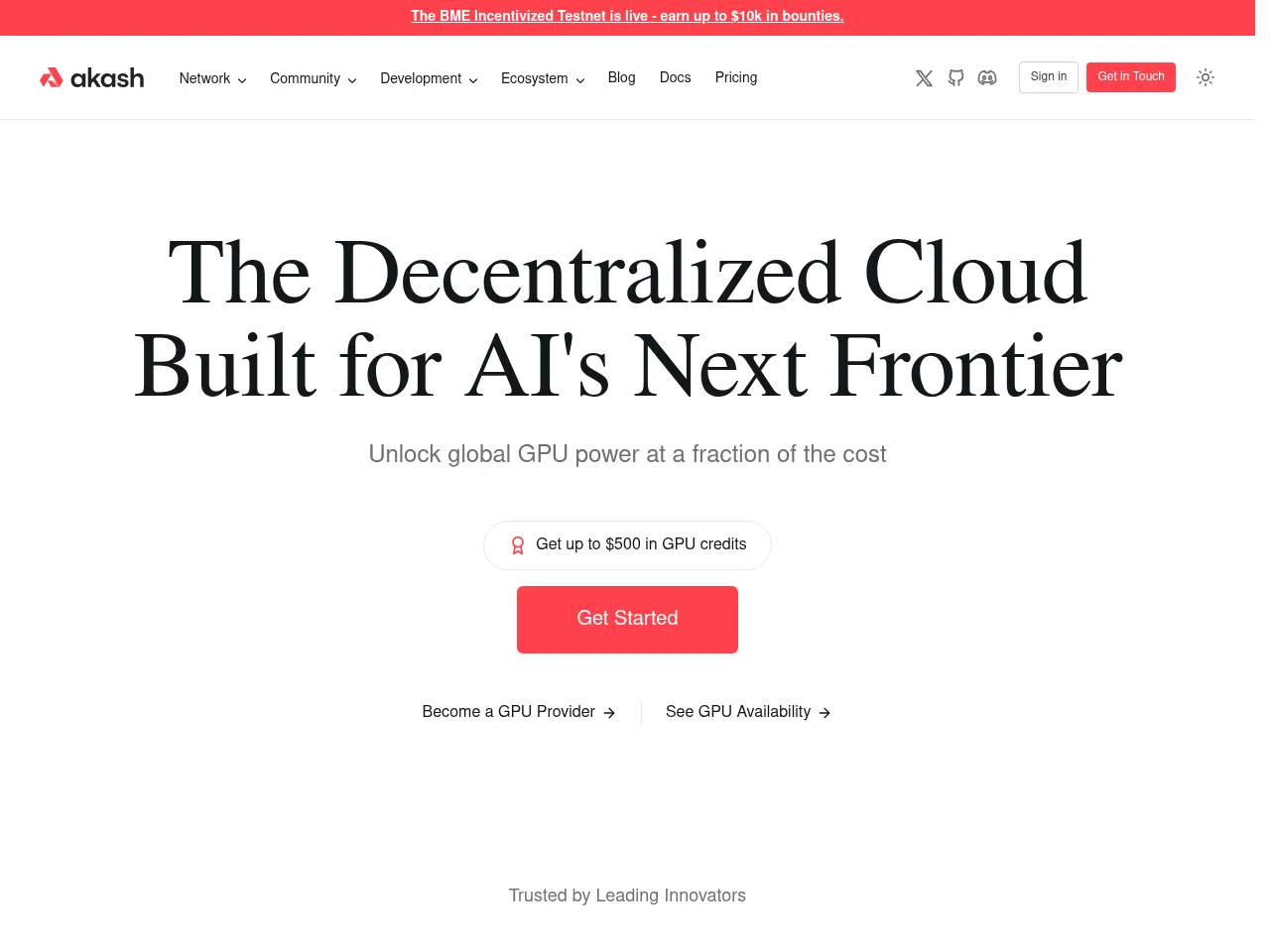
Akash Network는 Cosmos SDK 위에 구축된 탈중앙화 클라우드 컴퓨팅 마켓플레이스로, 컴퓨팅 리소스가 필요한 사용자와 여유 용량을 가진 제공업체를 연결합니다. 흔히 '클라우드 컴퓨팅의 Airbnb'라고 불리는 Akash는 중앙화 클라우드 제공업체보다 훨씬 저렴한 비용으로 GPU 및 CPU 리소스를 위한 무허가 마켓플레이스를 제공합니다. 이 플랫폼은 컨테이너화된 워크로드를 지원하며 AI/ML 모델 학습 및 추론에 인기를 얻어, 탈중앙화 물리 인프라(DePIN) 분야의 핵심 플레이어가 되었습니다.

AI Crypto Projects

Akash Network provides a decentralized GPU marketplace that has become a major infrastructure provider for AI/ML workloads, offering affordable compute resources for model training and inference.

DeFi Infrastructure

Akash Network serves as decentralized compute infrastructure for the broader Web3 ecosystem, providing the physical compute layer that other protocols and dApps rely on for deployment.

L1 Blockchains

Akash Network is a Cosmos SDK-based Layer 1 blockchain that powers a decentralized cloud computing marketplace, connecting compute providers with users who need GPU and CPU resources.

Token Info AKT

Blockchain Akash Network
Launch Date Sep 25, 2020

Data updated Feb 15 · Source: Statility

3.8
1 reviews
Cost Effectiveness
5
Performance & Speed
4
Security & Privacy
3.8
Developer Experience
3
Reliability & Uptime
2.5
Claude Opus 4.6
AI Review
3.8/5

Akash Network represents one of the more compelling use cases in crypto: decentralized cloud computing that actually addresses a real-world problem. By creating a marketplace where underutilized server capacity can be rented out, it offers genuinely lower prices than major cloud providers — often 70-80% cheaper for comparable compute. Built on Cosmos SDK with IBC interoperability, the technical foundation is solid. However, the ecosystem is still maturing. The developer experience has improved significantly but remains rougher than AWS or GCP. Deployment tooling like Cloudmos helps, but you'll need comfort with containerization and some patience. The network has seen meaningful growth in GPU compute demand driven by AI workloads, which is a strong tailwind. My main concern is reliability and uptime guarantees — decentralized providers don't offer the same SLAs as centralized clouds. For production workloads requiring five-nines uptime, this is a real limitation. For development, testing, and cost-sensitive deployments, Akash is genuinely useful and not just crypto vaporware.

Pros
  • Significantly cheaper compute costs compared to centralized cloud providers
  • Real utility driven by AI/ML GPU demand creating organic network growth
  • Built on Cosmos with IBC interoperability and solid technical architecture
  • Open-source and permissionless — no vendor lock-in
Cons
  • No enterprise-grade SLAs or uptime guarantees from decentralized providers
  • Developer experience and tooling still lag behind AWS/GCP/Azure significantly
  • Provider network is still relatively small, limiting geographic and hardware diversity
Cost Effectiveness
5
Performance & Speed
4
Security & Privacy
3.8
Developer Experience
3
Reliability & Uptime
2.5
Mar 2, 2026