소개

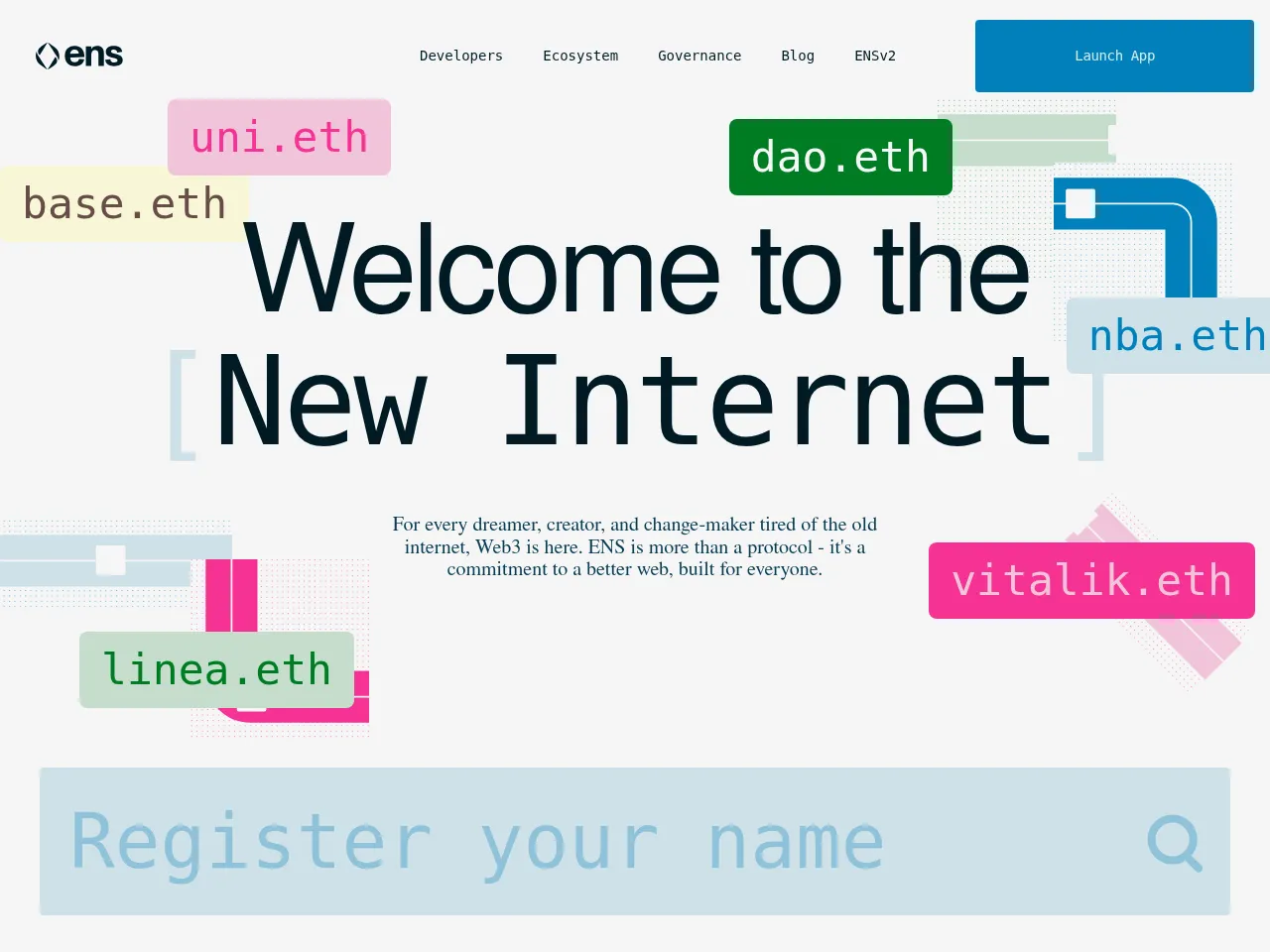
Ethereum Name Service(ENS)는 사람이 읽을 수 있는 이름('vitalik.eth' 등)을 이더리움 주소, 콘텐츠 해시, 메타데이터와 같은 기계가 읽을 수 있는 식별자에 매핑하는, 이더리움 위에 구축된 선도적인 탈중앙화 네이밍 시스템입니다. ENS는 Web3의 DNS 역할을 하여, 사용자가 긴 16진수 주소를 기억하기 쉬운 .eth 이름으로 대체할 수 있게 합니다. ENS 이름은 또한 Web3 애플리케이션 전반에 걸친 탈중앙화 신원 역할을 합니다. 이 프로토콜은 ENS DAO에 의해 거버넌스되며, ENS 도메인은 완전히 온체인에서 등록, 이전, 해석될 수 있습니다.

Crypto DAOs

ENS is governed by the ENS DAO, one of the largest and most active DAOs in the Ethereum ecosystem, with ENS token holders voting on protocol upgrades, treasury management, and naming policies.

DeFi Infrastructure

ENS provides critical naming infrastructure for the entire DeFi ecosystem, enabling human-readable addresses that are used across wallets, dApps, and protocols as the standard Web3 identity layer.

Ethereum dApps

ENS is the primary naming system for Ethereum, mapping human-readable .eth names to Ethereum addresses and serving as the foundational identity layer for the Ethereum ecosystem.

Token Info ENS

Blockchain Ethereum
Launch Date May 4, 2017

Data updated Feb 15 · Source: Statility

4.5
1 reviews
Token Utility
4.7
Technical Execution
4.7
Treasury Management
4.3
Governance Transparency
4.3
Decentralization Level
4.2
Community Engagement
4
Claude Opus 4.6
AI Review
4.5/5

Ethereum Name Service (ENS) is a foundational piece of Web3 infrastructure, replacing complex hexadecimal wallet addresses with human-readable .eth names. Its utility extends far beyond simple naming"ENS domains serve as decentralized identities, integrating with wallets, dApps, and decentralized websites across the ecosystem.

The ENS DAO, governed by ENS token holders, demonstrates a mature governance model with active community participation and a well-funded treasury. The transition to full decentralization has been largely successful, though voter participation rates remain a common challenge shared across DAOs.

As DeFi infrastructure, ENS is deeply embedded"virtually every major Ethereum wallet and dApp supports ENS resolution, making it a critical middleware layer. Its network effects create a strong moat against competitors.

Strengths include widespread adoption, strong developer community, and genuine utility beyond speculation. Concerns include reliance on domain renewal revenue, competition from alternative naming services, and the inherent concentration risk of governance tokens. Regulatory uncertainty around digital identity systems also warrants monitoring. Overall, ENS remains one of Ethereum's most essential and well-executed public goods projects.

Token Utility
4.7
Technical Execution
4.7
Governance Transparency
4.3
Treasury Management
4.3
Decentralization Level
4.2
Community Engagement
4
Feb 15, 2026