Über uns

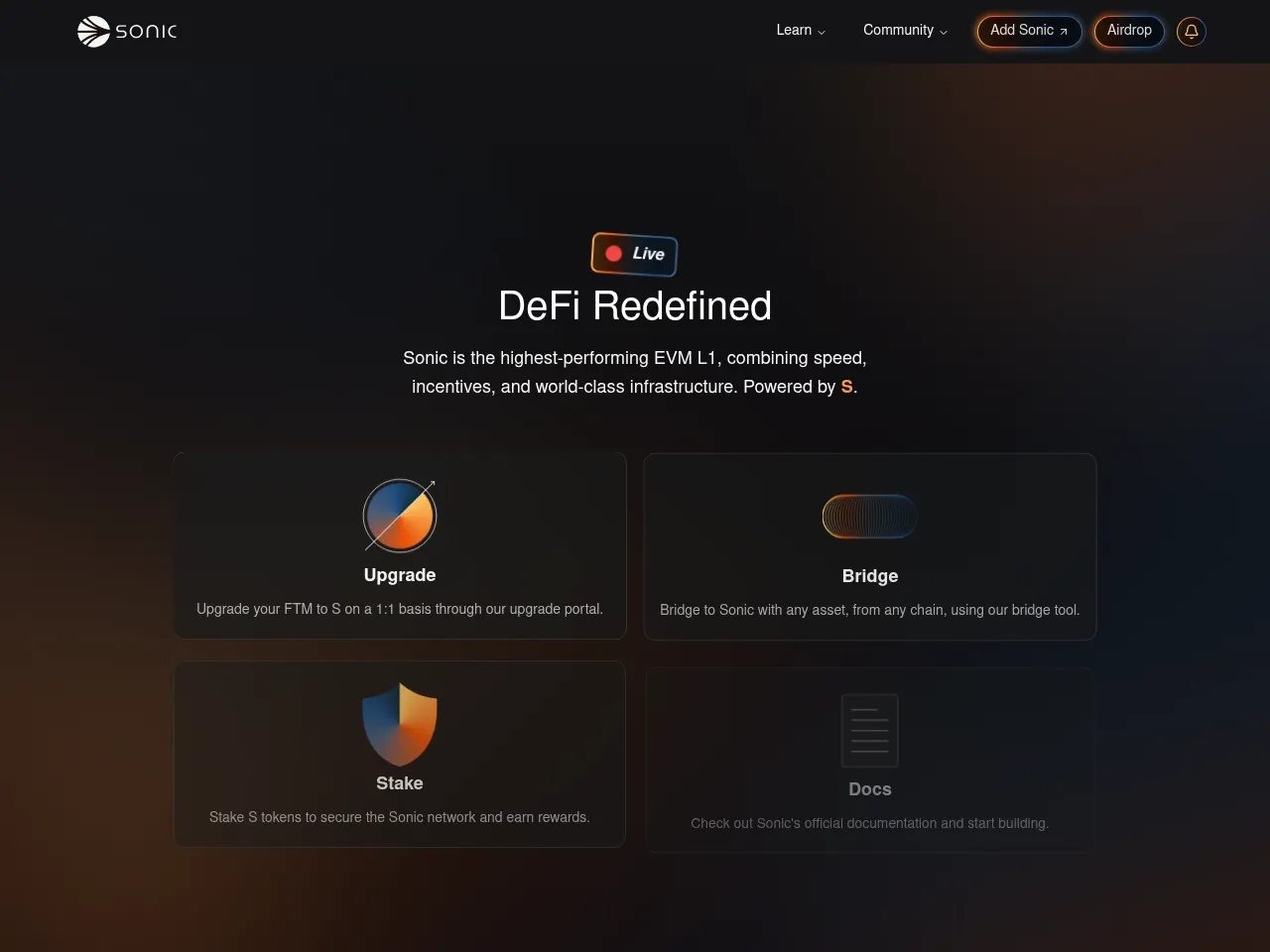
Sonic (ehemals Fantom) ist eine leistungsstarke EVM-kompatible Layer-1-Blockchain, die sich aus dem ursprünglichen Fantom-Opera-Netzwerk entwickelt hat. Die vom Gründer Andre Cronje und Michael Kong gegründete Plattform wurde Ende 2024 zu Sonic rebranded und startete eine neue Chain mit erheblichen Leistungsverbesserungen. Sonic verwendet einen fortschrittlichen DAG-basierten Konsensmechanismus namens Lachesis, der nahezu sofortige Transaktionsabschlussfinität ermöglicht. Das Upgrade führte die Sonic Virtual Machine ein, die die Ausführungsgeschwindigkeit im Vergleich zu Standard-EVM-Implementierungen dramatisch verbessert. Sonic verfügt über ein Fee-Monetisierungsprogramm, das bis zu 90% der Transaktionsgebühren an dApp-Entwickler zurückgibt und ein einzigartiges Anreizmodell für Builder schafft. Das Ökosystem erbte Fantoms etablierte DeFi-Landschaft und zieht weiterhin neue Projekte an, besonders in DeFi, Lending und Yield-Optimierung. Das S-Token ersetzte das vorherige FTM-Token durch eine 1:1-Migration.

Crypto Staking

S token holders can stake by delegating to validators on the Sonic network to earn staking rewards and help secure the chain's proof-of-stake consensus.

DeFi

Sonic hosts a mature DeFi ecosystem inherited from Fantom including DEXes, lending protocols, and yield optimizers, enhanced by its Fee Monetization program for developers.

EVM Blockchains

Sonic is fully EVM-compatible with an enhanced Sonic Virtual Machine that provides faster execution than standard EVM, allowing seamless deployment of Solidity smart contracts.

L1 Blockchains

Sonic is an EVM-compatible Layer 1 blockchain (evolved from Fantom) using the Lachesis asynchronous BFT consensus mechanism for near-instant finality and high throughput.

Token Info S

Blockchain Sonic
Consensus Lachesis (aBFT)
Launch Date Dec 18, 2024

Data updated Feb 15 · Source: Statility

4.1
1 reviews
Withdrawal Speed
4.6
User Interface
4.2
Fee Structure
4
Security & Trust
3.8
Staking Yield
3.5
Claude Opus 4.6
AI Review
4.1/5

Sonic (formerly Fantom) represents a significant rebrand and technical evolution under Sonic Labs. Built on the Lachesis asynchronous Byzantine Fault Tolerant (aBFT) consensus mechanism, Sonic delivers sub-second finality and high throughput, positioning it competitively among L1 blockchains. Its full EVM compatibility ensures seamless migration for developers and existing dApps, which is a strong advantage for ecosystem growth. The DeFi landscape on Sonic benefits from this performance edge, with growing TVL and an expanding roster of protocols. Staking the S token supports network security through a validator-based model, though the staking ecosystem is still maturing compared to larger chains like Ethereum or Solana. The team, led by Andre Cronje"a respected but sometimes polarizing figure in DeFi"brings deep expertise but also carries reputational risk given past project departures. Key concerns include the relatively smaller ecosystem size, dependence on continued developer adoption post-rebrand, and competitive pressure from other high-performance L1s. Overall, Sonic is a technically impressive chain with genuine potential, though it must prove sustained traction in a crowded market.

Withdrawal Speed
4.6
User Interface
4.2
Fee Structure
4
Security & Trust
3.8
Staking Yield
3.5
Feb 15, 2026