À propos

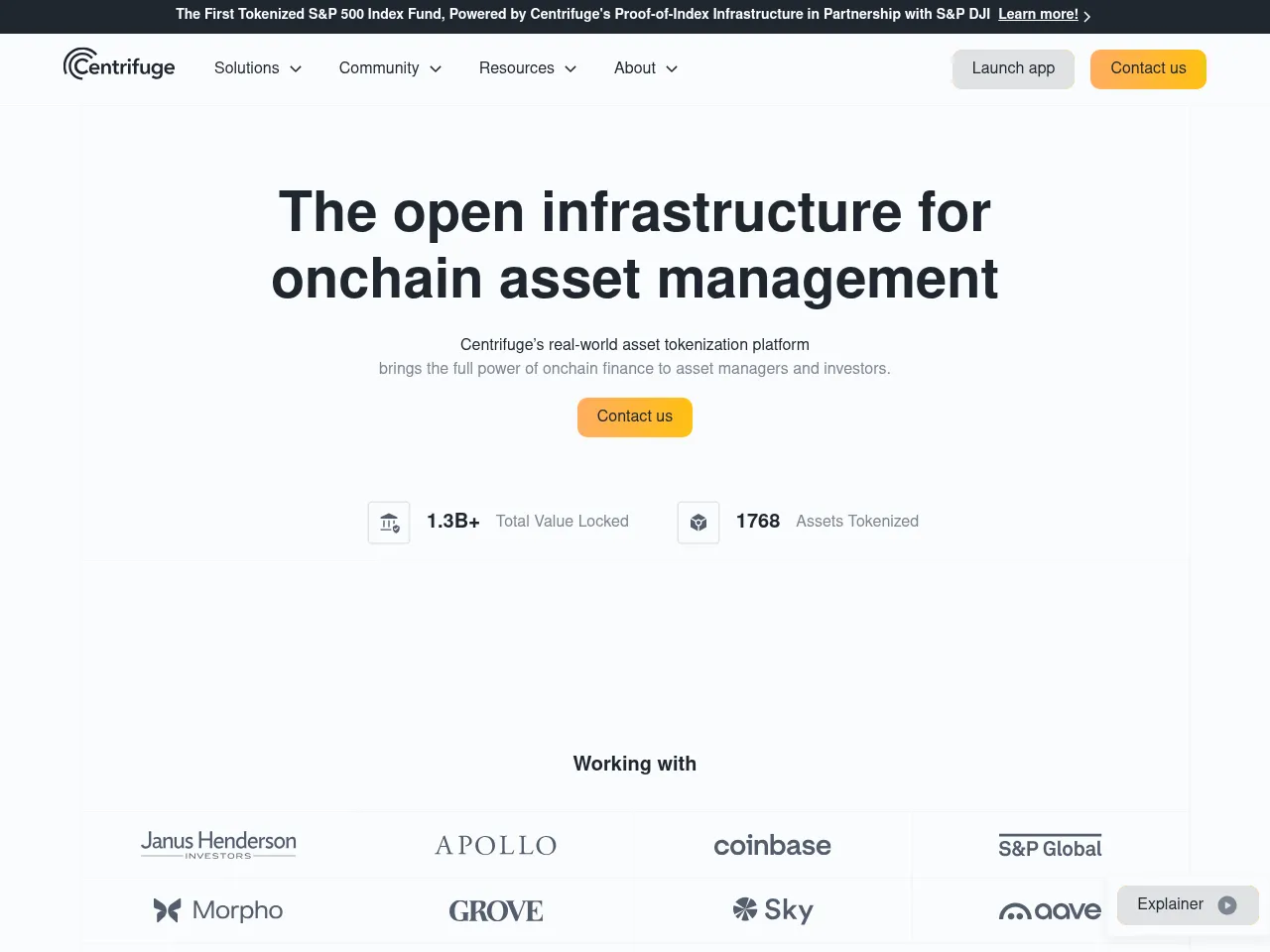
Centrifuge est un protocole de tokenisation d'actifs du monde réel qui permet aux entreprises de financer leurs actifs on-chain. Il permet aux originateurs d'actifs de tokeniser des factures, l'immobilier et d'autres actifs financiers en tant que NFT et de les utiliser comme collatéral pour accéder à la liquidité DeFi. Centrifuge a été un pionnier en apportant les RWA à la DeFi, fournissant l'infrastructure pour le premier coffre d'actifs du monde réel de MakerDAO. Le protocole exploite sa propre blockchain (Centrifuge Chain) construite sur Substrate et son dApp de prêt Tinlake (maintenant Centrifuge App) connecte les emprunteurs du monde réel avec les prêteurs on-chain. CFG sert de token natif de gouvernance et de staking.

DeFi

Centrifuge is a pioneering RWA DeFi protocol that bridges real-world assets with on-chain capital markets, providing the infrastructure for tokenizing and financing real-world collateral.

Ethereum dApps

Centrifuge's lending application operates on Ethereum, connecting its Substrate-based chain with Ethereum DeFi for real-world asset financing.

Lending & Borrowing

Centrifuge enables real-world borrowers to access DeFi liquidity by tokenizing their assets as collateral, while on-chain lenders earn yield from real-world cash flows.

Visit

Token Info CFG

Blockchain Ethereum
Launch Date May 1, 2019

Data updated Feb 15 · Source: Statility

3.8
1 reviews
Yield & Returns
3
Asset Transparency
3
Security & Safety
2.5
Regulatory Compliance
2
Liquidity & Redemptions
2
Claude Opus 4.6
AI Review
3.8/5

Centrifuge occupies an important niche in DeFi by tackling one of the sector's most meaningful challenges: bridging real-world assets (RWAs) onto the blockchain. The protocol's Tinlake platform (now evolved into its broader Centrifuge App) allows asset originators to tokenize tangible assets like trade receivables and real estate loans, creating structured pools that DeFi investors can fund. This is genuinely innovative and addresses a real market need—most DeFi still revolves around crypto-native assets. The MakerDAO integration was a significant milestone, channeling real institutional capital through the protocol. However, Centrifuge faces real hurdles: the complexity of legal structures around tokenized assets creates friction, liquidity in many pools can be thin, and the user experience still feels niche and somewhat opaque for newcomers. Regulatory uncertainty around RWA tokenization remains a persistent overhang. The protocol is building something substantive, but adoption has been slower than the RWA narrative might suggest, and smart contract risk layered on top of real-world credit risk creates compounding uncertainties.

Pros
  • Pioneer in real-world asset tokenization with a functional, live protocol
  • Strong institutional partnerships, notably with MakerDAO and Aave
  • Addresses a genuine gap by connecting traditional finance assets to DeFi liquidity
  • Built on Substrate with its own parachain, offering architectural flexibility
Cons
  • Pool liquidity can be thin, and redemption timelines are sometimes unpredictable
  • Complex legal and regulatory landscape creates ongoing uncertainty for users
  • Layered risk profile (smart contract + credit + legal) that's difficult to fully assess
Asset Transparency
3
Yield & Returns
3
Security & Safety
2.5
Liquidity & Redemptions
2
Regulatory Compliance
2
Mar 1, 2026